
Dabong
Dabong Village is located in Kubu District, Kubu Raya Regency, West Kalimantan Province. According to information published on the TanahKita portal, which refers to the Peat Village Profile of Dabong Village prepared by the Peatland Restoration Agency (Badan Restorasi Gambut/BRG), the village was formerly known as Benua Dabung and is estimated to have been established in 1791. Its history is associated with a figure named Juragan Muhammad Shaleh, who is reported to have played a role in trade and the spread of Islam. As this information is based on a secondary source, the village’s founding year, the origin of its name, and the role of this historical figure still need to be verified through official village documents or interviews with local community leaders.
0
Total Farmers
0
Farmer Groups
-
Protected Forest (Ha)
0
Village Documents
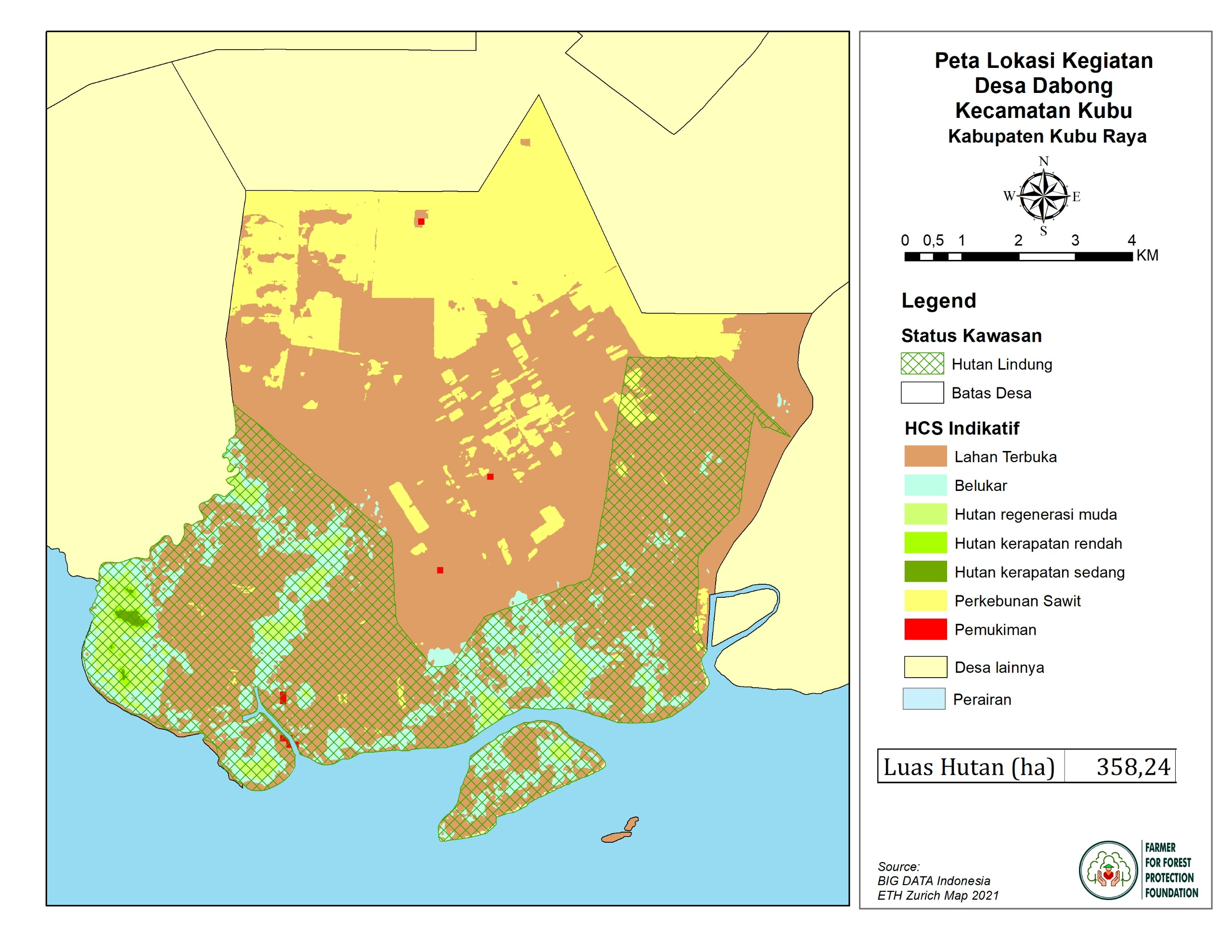
Location Map
Lat: -0.5934590 | Lng: 109.2575871
Village Narrative & Story
Geographical Condition & Profile
Dabong Village is located in Kubu District, Kubu Raya Regency, West Kalimantan Province. According to information published on the TanahKita portal, which refers to the Peat Village Profile of Dabong Village prepared by the Peatland Restoration Agency (Badan Restorasi Gambut/BRG), the village was formerly known as Benua Dabung and is estimated to have been established in 1791. Its history is associated with a figure named Juragan Muhammad Shaleh, who is reported to have played a role in trade and the spread of Islam. As this information is based on a secondary source, the village’s founding year, the origin of its name, and the role of this historical figure still need to be verified through official village documents or interviews with local community leaders.
According to population data as of June 30, 2020, Dabong Village had a total population of 2,591 people, consisting of 1,348 males and 1,243 females across 707 households. These figures provide an overview of the village’s demographic conditions in 2020. However, as the data are historical, the population and household figures should be updated using records from the village government or the Population and Civil Registration Office to reflect current conditions.
In terms of education, population data as of June 30, 2020, recorded 1,012 people who had completed primary school. In addition, 339 people had not completed primary school, 256 had completed junior secondary school, and 158 had completed senior secondary school. The data also recorded five people who had completed Diploma I or Diploma II programmes and 17 people who held a bachelor’s degree (S1). Furthermore, 797 people were recorded under the category of no schooling or not yet attending school. These figures are historical and require further verification to clarify the coverage of each category and assess changes in the community’s educational attainment.
Dabong Village has economic potential associated with agriculture, plantations, fisheries, and the use of coastal resources. According to information published on the TanahKita portal, crops cultivated by the community include coconut, oil palm, rice, maize, watermelon, chilli, long beans, cucumber, eggplant, sweet potato, cassava, and mustard greens. Meanwhile, fishing activities utilise local aquatic resources, including fish, shrimp, clams, and mangrove crabs. These resources could support local economic development through increased productivity, agricultural and fishery product processing, and improved market access.
In addition to its economic potential, Dabong Village has a mangrove ecosystem that plays an important role in coastal protection and the sustainability of local livelihoods. A study by Sumarni, Mulki, and Ayuningtyas (2021) on mangrove ecotourism in Dabong Village identified nature-based tourism opportunities, including mangrove forest exploration, river trips, and observation of coastal flora and fauna. The study also documented the existence of a tourism awareness group (Kelompok Sadar Wisata) responsible for managing the ecotourism area. This potential could be developed through community-based tourism while maintaining ecosystem conservation. However, the current condition of tourism facilities, management practices, and mangrove cover should be reassessed through field verification.
Sources: TanahKita, Conflict between Dabong Village and Forest Areas; Population Data of Dabong Village, Kubu District, Kubu Raya Regency, June 30, 2020; Sumarni, E., Mulki, G. Z., & Ayuningtyas, R. A. (2021), Identification of Tourism Attractions in Dabong Village Mangrove Ecotourism.
Indigenous People & Local Wisdom
-
Commodity Distribution
No commodity data.
Farmer Groups
No farmer group data yet.
Land Use & Forest Data
No forest data yet.
Visual Gallery
Reference Documents
No documents yet.