
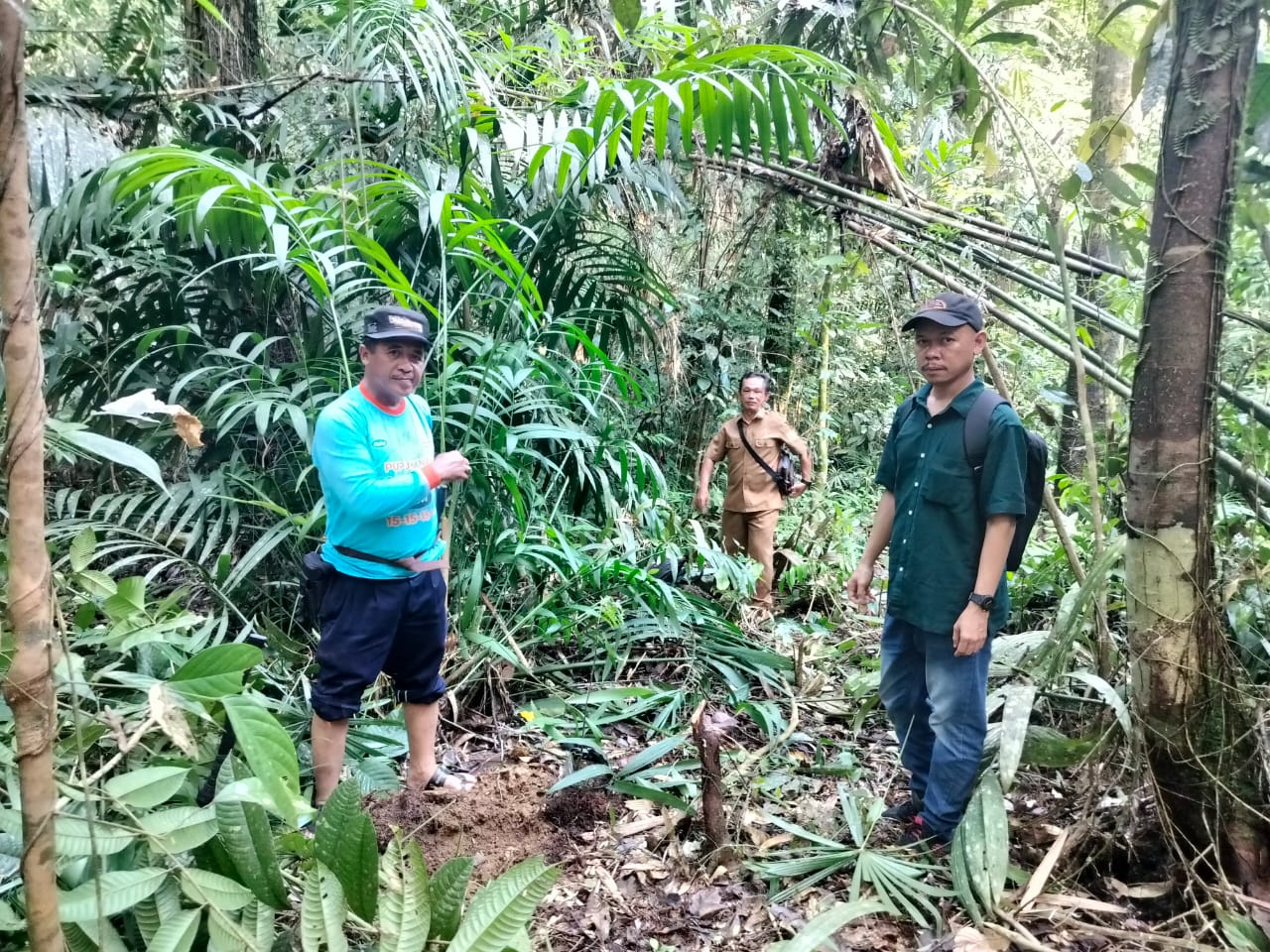
Amidst increasing pressure on Indonesia's forests, the Farmers for Forest Protection Foundation (4F) was established as a grassroots initiative. Launched on August 1, 2023, in Jakarta, 4F was formed by and for smallholder farmers and local and indigenous communities. Its goal is simple yet meaningful: to bridge farmers with markets, governments, and stakeholders to achieve a sustainable landscape without deforestation.
More than just an organization, 4F is a collaborative platform. Through the implementation of the SKT–NKT toolkit, the Incentives & Benefits (I&B) scheme, and community-based forest management and monitoring systems, 4F drives real change at the grassroots level. Its main focus is to ensure that those who protect and restore forests receive adequate monetary and non-monetary support, while also ensuring that this support contributes directly to measurable and sustainable forest protection.
This approach places smallholder farmers and indigenous peoples as key actors in conservation. 4F specifically supports communities committed to zero deforestation practices and the protection of High Conservation Value (HCV) areas. Within this framework, sustainability is understood not only as environmental protection, but also as social justice and community economic empowerment.
One of the foundations of 4F's work is the HCV-HCV toolkit developed and tested in the Indonesian context. This toolkit is designed to address the complexity of smallholder production landscapes, which not only depend on oil palm but also manage rubber, agroforestry systems, home gardens, and forest areas in shifting cultivation or customary forest practices. Although its application is currently limited to smallholder oil palm and rubber farmers, the participatory principles underlying it open up opportunities for replication in other commodities and regions.
In the future, this toolkit is expected to be adopted as a new module within the HCSA framework, as well as a step forward in the development of global cross-commodity guidelines for smallholders. The development of a digital version and a periodic review process are also planned, so that field learning can continue to be integrated.
However, 4F recognizes that transformation cannot be achieved alone. Implementation of the toolkit requires multi-stakeholder support—from local governments, civil society organizations, HCSA supporters, to technical experts. Incentives and subsidies are key elements to encourage the adoption of sustainable practices, given the limited capacity and resources faced by smallholders.
Ultimately, 4F believes that forest protection will only succeed if the communities on the front lines are empowered and valued. By placing farmers as guardians of the landscape, 4F affirms that the future of Indonesia's forests is not only determined by policy, but also by the hands that daily tend the land, plant hope, and keep the forests standing.