
Farmers for Forest Protection Foundation (4F)
"It's a good thing that this kind of activity is being carried out, so that the customary forests in our village can be safeguarded. It would be such a shame if the forests here were damaged or lost, because then our grandchildren would no longer know our traditions," said Mr Domisius Didi, Chairman of the Semantun Village Consultative Body (BPD), as he sat on a fallen tree trunk.
That afternoon (15 April 2026), the field verification team was preparing inside Lengkadai Hulu Forest before setting out to survey and observe several points within it. Some members were checking the readiness of the equipment they would be using, while others were attempting to dig up the roots of the pasak bumi plant growing nearby, to be used as medicine.
That day's verification exercise took place in Lengkadai Hulu Forest, Semantun Village, Permata Kecubung Sub-district, Sukamara Regency, Central Kalimantan. This verification, or survey, forms one stage in the implementation of the High Carbon Stock–High Conservation Value (HCS–HCV) approach, which serves as 4F's principal framework for identifying and getting to know its assisted areas before making particular decisions or policies concerning the development and sustainability of natural resources within them.
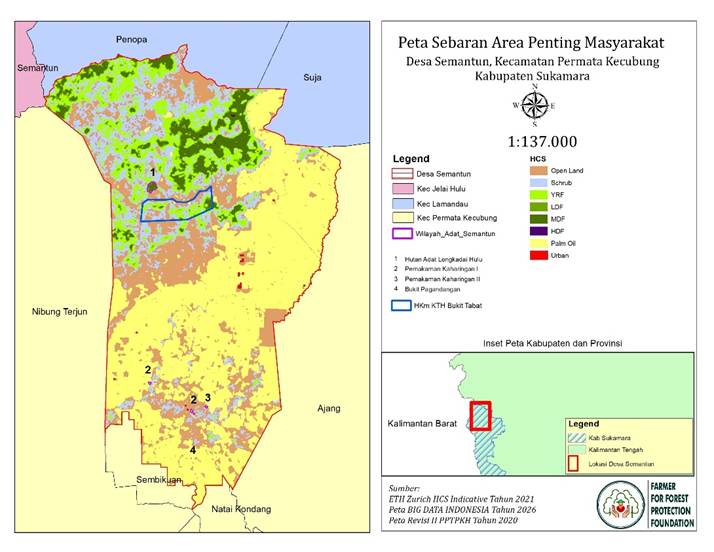
Figure 1. Map of Important Areas in Semantun Village
Following the outcomes of the second community consultation held on 13 April 2026, the community designated two forests as important areas to be jointly protected — Lengkadai Hulu Forest and Bukit Pagendangan Forest — along with two Kaharingan burial grounds.
Under the original plan, Lengkadai Hulu Forest was to be the first site verified/surveyed (14 April 2026). However, since the local facilitator was unavailable on 14 April (he was preparing for a traditional berayah ceremony at the house of Semantun's customary leader), 4F's spatial team decided instead to survey the two Kaharingan burial grounds close to the village settlement. The community regards both burial grounds as important areas, as they are considered sacred sites where, at certain times, adherents of the Kaharingan faith perform their rituals.
A Journey Well Earned
To reach Lengkadai Hulu Forest, the field verification party — comprising six people (two members of 4F's spatial team and four local facilitators) — had to travel for roughly an hour from the centre of the village. The route passed through community garden tracks and crossed land under the Right to Cultivate (HGU) title held by PT Graha Cakra Mulya (GCM), covering some 20,000 hectares in total (of which 11,815 hectares fall within Semantun Village's administrative boundary).
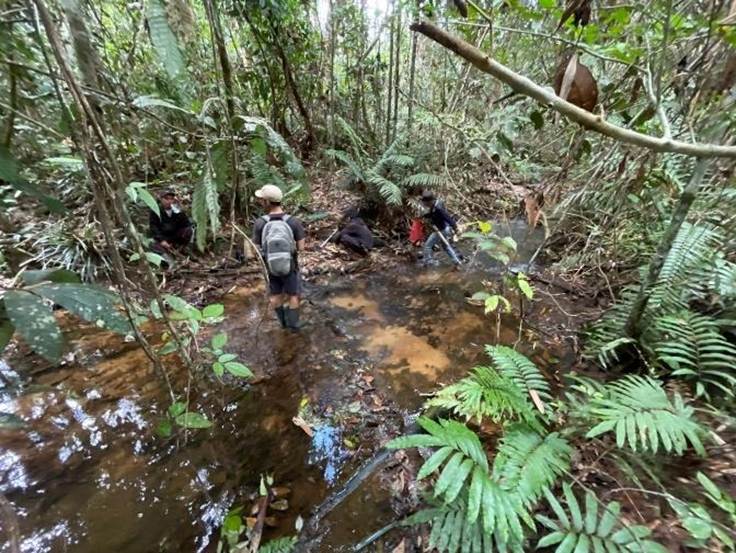
Figure 2. Saka Nibung River within Lengkadai Hulu Forest.
Lengkadai Hulu covers around 20 hectares and lies adjacent to community-owned oil palm land, separated by a garden track. Within the forest runs a river called Saka Nibung, which serves as a source of drinking water for community members with oil palm plots nearby, and is also used for fishing.
The field verification team recorded several large endemic tree species (with diameters exceeding 30 cm) within the forest, including Nyatoh (Palaquium sp.), Ubar Merah (Syzygium sp.), Meranti (Shorea spp.), Agarwood/Gaharu (Aquilaria malaccensis), Ubar Putih (Diospyros sp.), Manjau (Shorea macrophylla), Pekakar (Uncaria gambir), Tulang Ular (Strychnos sp.), Mbalun (Shorea sp.) and Kulim (Scorodocarpus borneensis).
Besides these large trees, Lengkadai Hulu also contains plant and tree species used by the community for household needs and consumption, namely Bamboo (Bambusa sp.), Marau Rattan (Korthalsia rigida Blume), Kelukup (Lepisanthes sp.) — whose bark was traditionally used by earlier generations as house walling — Hembawang (Durio sp.), whose fruit is edible in the manner of durian; Bangkal (Nauclea subdita), whose bark can be soaked and grated to produce a cosmetic powder; and Minyak Ilang (Cananga odorata), whose resin can be turned into oil that in past times was commonly used as fuel for oil lamps.
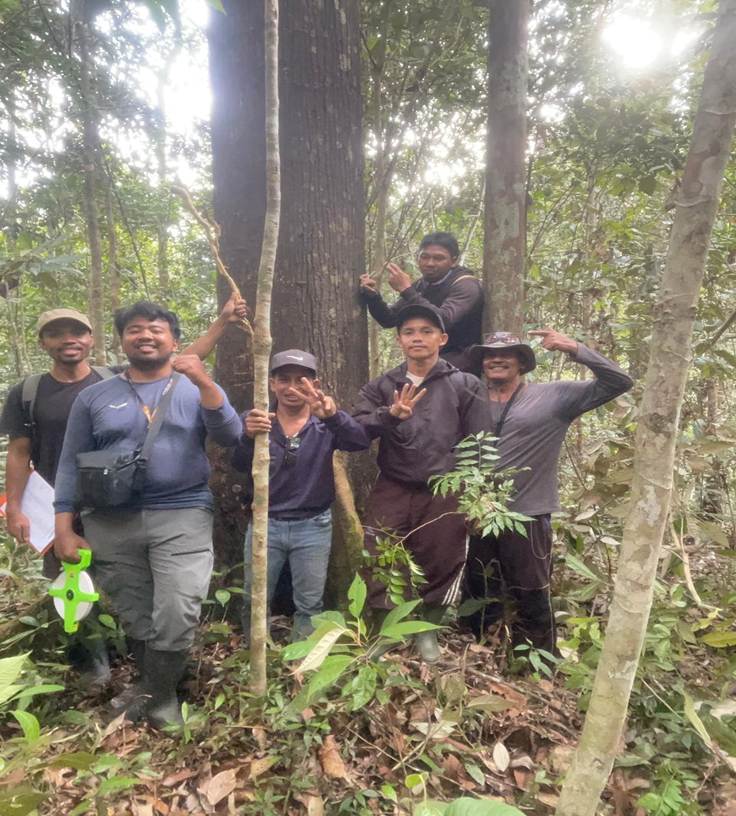
Figure 3. A Meranti tree within Lengkadai Hulu Forest.
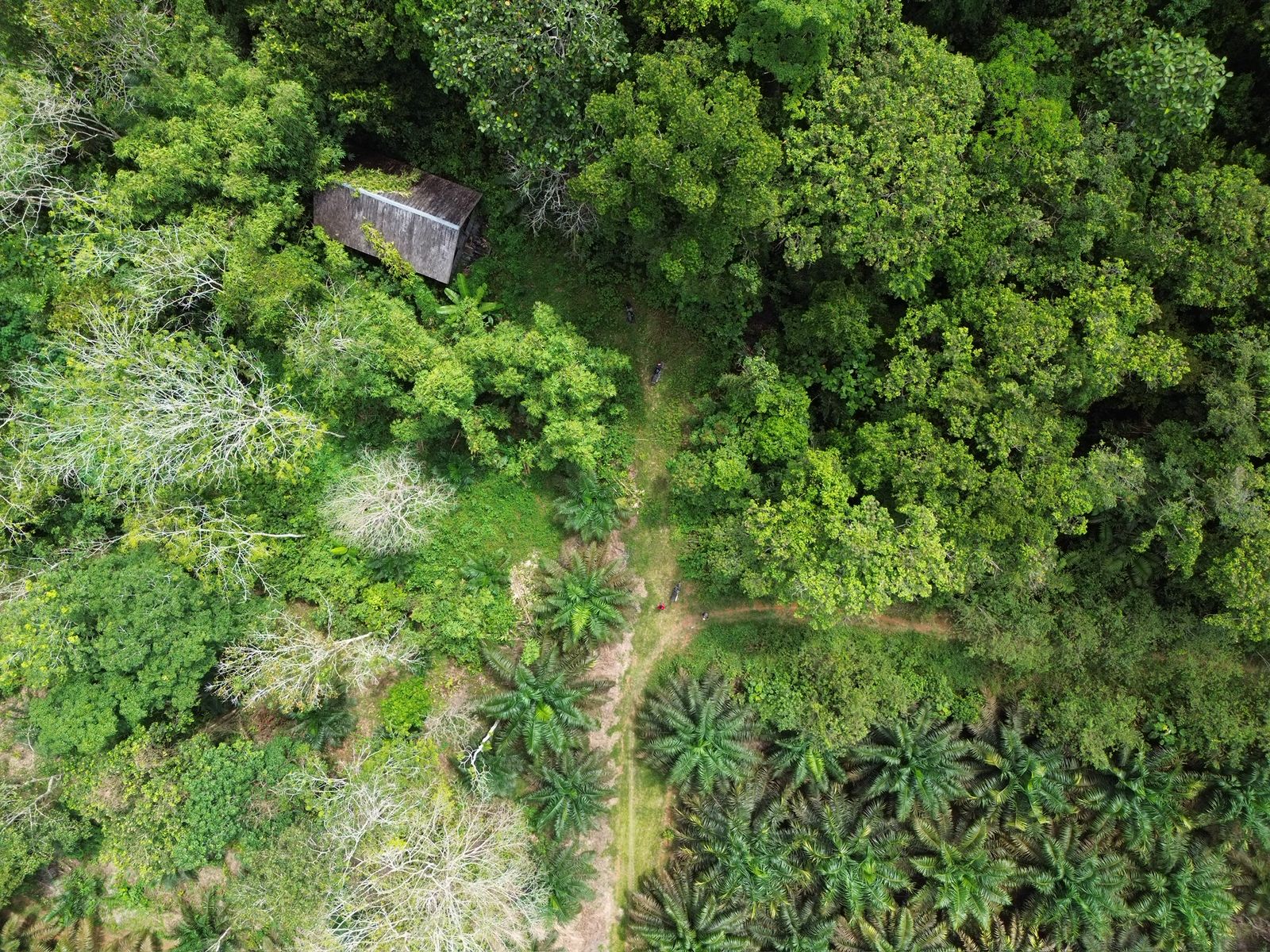
Bukit Pagendangan Forest, verified on 16 April 2026, lies only about 2 km from the village centre, a journey of just 5–10 minutes. During the second community consultation, villagers described this forest as covering 3 hectares, though the survey found its actual extent to be closer to 1.5 hectares. Bukit Pagendangan Forest is bordered on all sides by community oil palm plantations.
Although Bukit Pagendangan is relatively small for a forest, it contains large trees (over 30 cm in diameter) dominated by Belabu (Schima wallichii) and Halaban (Vitex pinnata), along with Ubar Merah and Ubar Putih (Diospyros sp.). As in Lengkadai Hulu, Bukit Pagendangan also supports plants that meet the community's household and consumption needs, such as Marau Rattan (Korthalsia rigida Blume), Bamboo (Bambusa sp.) and Jengkol (Archidendron pauciflorum).
What makes Bukit Pagendangan especially significant to the people of Semantun is its role as a centre of traditional culture. Within the forest lies a site regarded as sacred: a formation of standing stones, said by tradition to be the place where the ancestors of the Semantun people once meditated; the site of the pagendangan ritual, performed to ward off misfortune, fulfil vows, seek the help of the Almighty, and give thanks according to custom; and a traditional shrine or house used during a ritual held once a year, when the entire Semantun community gathers there together. The shrine appears somewhat neglected, overgrown with shrubs, since custom dictates it may only be cleared once a year, ahead of the annual thanksgiving ceremony. Because of this sacredness, villagers say, women who are menstruating are forbidden from entering Bukit Pagendangan Forest.
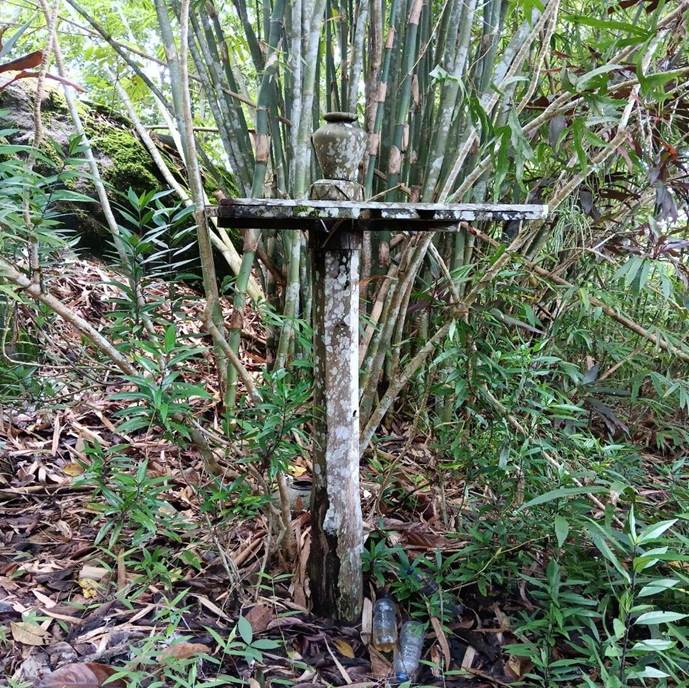
Figure 4. The site of traditional rituals in Bukit Pagendangan Forest.
Sustaining the Forest as a Legacy for Future Generations
Amid efforts to protect the forest and hopes of passing on tradition to future generations, the people of Semantun must contend with the increasingly widespread growth of oil palm plantations. Since 1996, when a company first introduced it to the area, oil palm has become Semantun's leading commodity. Experience gained through smallholder plasma plantation schemes encouraged the community to convert their own land into oil palm gardens as well. Ongoing forest clearance over the past decade has transformed Semantun's landscape, which is now dominated by stretches of oil palm plantation, whether owned by companies or cultivated by the community, including people from outside the village and even from beyond Sukamara Regency. To date, of Semantun's total area of 18,100 hectares, 11,815 hectares fall under the HGU concession of PT Graha Cakra Mulya, not including the plasma smallholder land of PT Kalimantan Sawit Kusuma (based in Nibung Terjun Village) or land farmed independently by local smallholders.
This makes efforts to raise awareness of the forest's importance all the more urgent. Without them, the forest and the noble values it embodies risk fading away, unable to be passed on to future generations. Reflecting on this concern, Mr Domisius Didi, Chairman of Semantun's BPD, said: "Our hope is that we can preserve the customary forest in Semantun Village going forward, so that our grandchildren will come to know that the traditions of Semantun Village remain strong." Echoing this sentiment, Mr Igi, a customary leader, likewise expressed his hopes for the forest's preservation: "Our shared intention and purpose is to safeguard this customary land, so that it may continue to flourish and be preserved into the future."
Alongside these two figures, Mr Dody, a member of the village youth organisation (Karang Taruna), voiced his hope for Bukit Pagendangan Forest, home to several important customary sites: "We ask that the preservation of Bukit Pagendangan always be maintained, so that our traditions do not disappear," he said firmly.
Speaking to 4F, the three community figures who accompanied the spatial team throughout the activities in Semantun expressed their hope for continued cooperation in protecting and looking after their forest. "We are deeply grateful to the 4F foundation, which over these past few days has been exploring the potential that exists within Semantun Village's customary forest. Going forward, we hope this good cooperation will continue, and that together we can look after this customary forest so that it can flourish further — meaning that we protect it together for the sake of Semantun Village's sustainability, because these days, most of what we see along the roadside are oil palm trees," said Mr Domisius Didi, speaking on behalf of the group.
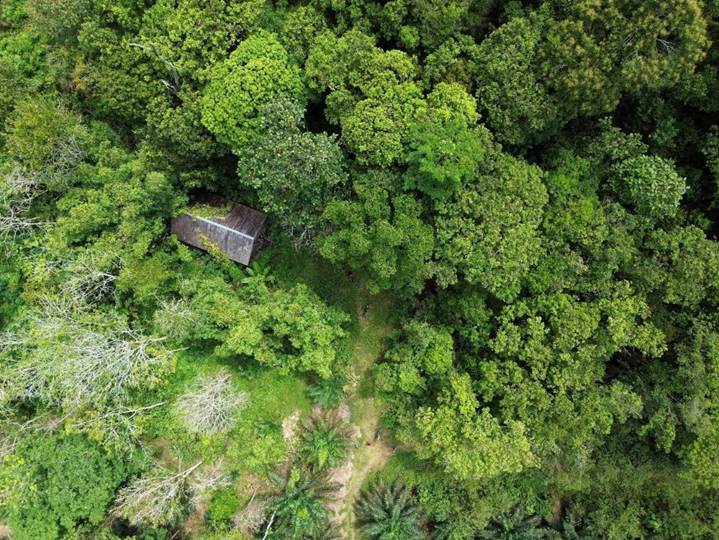
Figure 5. Aerial drone photograph of land cover on the edges of Bukit Pagendangan Forest, showing the traditional shrine building of the Semantun community.